So, picking the right Medical Silicone Molding manufacturer in 2026? It's not just about price tags or how many machines they've got. With medical devices, you also need clean production areas, silicone compounds that stay consistent, precise tooling, and paperwork you can actually count on. And honestly, the same supplier might be making a soft neonatal part, an implantable-grade seal, or one of those thin catheter valves—all in the same shop. Every application comes with its own set of risks—no two are quite the same.
Dr. Robert Langer, a leading biomedical engineer, put it well: “The most important thing is to focus on the patient.” And honestly, that principle should sit at the heart of every supplier review. Companies like WACKER, Dow, Momentive, Elkem, SIMTEC Silicone Parts, and Trelleborg Healthcare often come up because of their materials, process control, and experience in medical manufacturing. That matters. But here’s the thing: a famous name alone isn’t enough.
So take a close look—don’t just go by the logo.
Honestly, the best partners are the ones who can actually explain how they handle flash, cure consistency, particulate contamination, dimensional variation, and lot traceability. You also want to see real-world experience with validation, cleanroom molding, design for manufacturability, and regulatory documentation—not just talk. And in my experience? Site audits, sample reviews, and technical conversations tend to tell you way more than a slick marketing page ever will.
So this article takes a look at the best medical silicone molding manufacturers for 2026. We're judging them on things like capability, reliability, quality systems, and how well they know the applications. It also digs into communication after development kicks off—which, honestly, is easy to overlook. But a slow reply from engineering? That can throw off an entire device launch.
Look, no ranking is ever going to be perfect. How a supplier performs can shift depending on the factory, the region, even the type of project. So before buyers make that final call, it’s worth checking current certifications, where production actually happens, who owns the tooling, and customer references. And honestly? The biggest manufacturer isn’t always the best pick. The right partner is the one that keeps protecting patient safety, product performance, and realistic timelines—consistently.
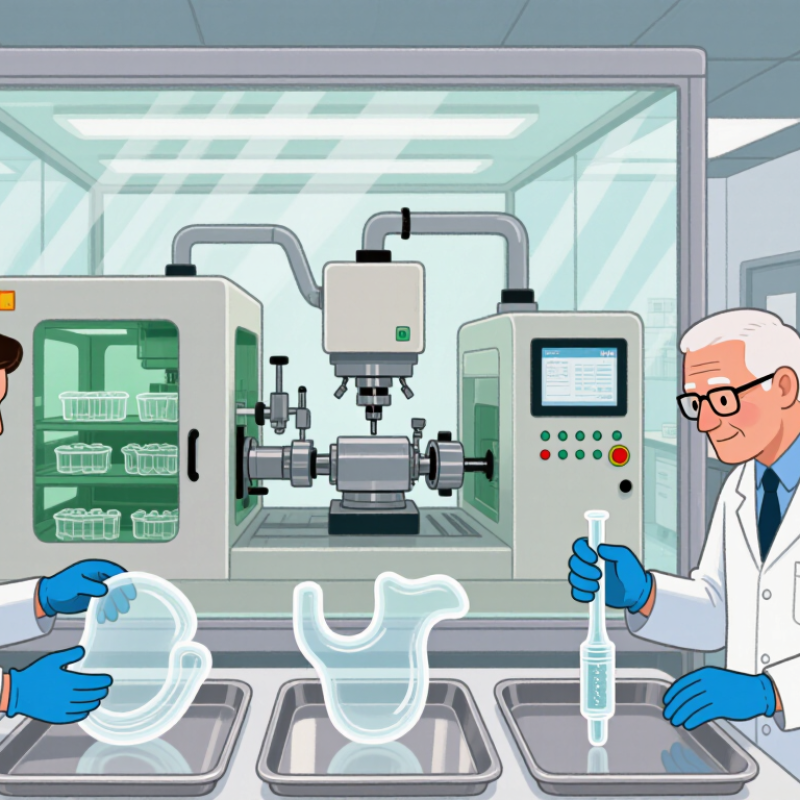
Medical silicone molding converts liquid or solid silicone into precise healthcare components. It combines controlled heat, pressure, tooling, and validated handling. The material remains flexible, chemically stable, and suitable for repeated contact with skin or body fluids. In practice, molding quality depends on more than the silicone grade. Vent design, curing time, and mold temperature can change the final result.
Applications are broad. Catheter seals, respiratory masks, feeding components, tubing connectors, and surgical instrument grips often use molded silicone. Some devices require soft surfaces, while others need stronger tear resistance or compression recovery.
Manufacturers may use injection molding, compression molding, or liquid silicone molding. Each method affects cycle time, tolerances, waste, and automation potential. Cleanrooms, traceable batches, and validated procedures support reliable production. Small defects matter.
The best medical silicone molding manufacturers show verified process control, not only attractive samples. Their systems should address ISO 13485 quality management and relevant biocompatibility testing, such as ISO 10993 evaluations. Material certificates, dimensional reports, aging data, and change-control records deserve careful review. Experienced engineers also examine flash, parting lines, air entrapment, and particulate risks under magnification. I have seen projects delayed because a seemingly minor mold adjustment changed sealing performance. No checklist is perfect. Design teams should test parts in realistic conditions, including sterilization, repeated compression, and temperature exposure. A manufacturer’s laboratory capability, operator training, and response to nonconformities often reveal more than its production speed.
Choosing the best medical silicone molding manufacturer in 2026 requires more than comparing prices or production photos. A reliable partner should demonstrate experience with Medical Silicone Injection Molding, controlled cleanroom processes, and documented quality systems. Ask for evidence of ISO 13485 certification, material traceability, and procedures aligned with ISO 10993 requirements. Certificates alone are not enough.
Evaluate how the manufacturer validates molds, machines, and critical processes. Look for measurable controls covering temperature, pressure, curing, flash, and particulate levels. Experienced teams should explain their inspection methods, sampling plans, and corrective-action records in clear language. They should also provide batch records that connect silicone lots to finished components. Small details matter here.
Review tooling maintenance and change-control practices before approving a supplier. A strong manufacturer can discuss tolerance studies, design-for-manufacturing feedback, and realistic production capacity. Ask to see anonymized inspection reports or audit examples. A polished website proves little. No audit is perfect. Even experienced teams can miss weak handoffs between engineering and production. That risk deserves open discussion, not confident promises. Reliable communication, transparent documentation, and consistent delivery often reveal more than impressive equipment.
Key standards for evaluating medical silicone molding manufacturers
This suggested evaluation model prioritizes quality management, biocompatibility, risk control, controlled manufacturing environments, process validation, and regulatory traceability. The percentages represent assessment weights rather than performance data from any specific company. ISO 13485, ISO 10993, ISO 14971, ISO 14644, USP /, and FDA 21 CFR Part 820 are commonly referenced frameworks for medical-device manufacturing and material evaluation.
Leading medical silicone molding manufacturers to consider in 2026 should demonstrate more than modern equipment. They need practical experience with implantable, wearable, and fluid-handling components. During supplier reviews, examine mold design, silicone handling, curing control, and cleanroom discipline. Small details matter, such as smooth edges, consistent wall thickness, and traceable material batches.
A capable partner should explain its medical injection molding process clearly. Ask how engineers control flash, air entrapment, tear strength, and dimensional variation. Review quality systems, validation records, inspection methods, and corrective-action procedures. Certifications such as ISO 13485 can support confidence, but they do not replace technical evidence. Request sample parts and inspect them under magnification. A tiny seam can become a serious usability concern.
Tips: Compare suppliers using the same drawing, tolerance range, and production volume. Ask for realistic lead times, not optimistic promises. Check whether the manufacturer supports design-for-manufacturing reviews before tooling begins. Evaluate communication during difficult discussions. No supplier is flawless. A transparent team that admits limitations may be safer than one offering perfect answers. I would also review packaging, shipment protection, and change-control practices. These areas are easy to overlook, yet they influence cleanliness, consistency, and long-term reliability.
The best medical Silicone Molding manufacturers in 2026 will compete on materials, process control, and evidence. Medical-grade silicone should offer stable tensile strength, low extractables, and consistent compression set. Platinum-cured liquid silicone rubber supports clean, repeatable injection molding. High-consistency rubber remains useful for compression molding and larger, simpler components. According to Grand View Research’s 2024 Medical Silicone Market report, the sector is projected to expand at about 7.8% CAGR through 2030. Growth alone does not prove manufacturing quality.
A capable supplier should demonstrate validated molding parameters, cavity balance, automated inspection, and complete lot traceability. Cleanroom production can reduce particles, but cleanroom status cannot replace process validation. Look for ISO 13485 quality systems and risk controls aligned with ISO 14971.
Biocompatibility evidence should reference the finished device, not only the raw silicone. Manufacturing experience matters when designing thin walls, microfeatures, overmolded connectors, or implantable geometries. Small flash lines can damage performance. They can also reveal weak mold maintenance.
Tips: Ask for material certificates, cure-system details, and recent capability studies. Request sample parts with dimensional data. Review tensile testing, elongation, hardness, and compression-set results. Confirm whether the manufacturer performs post-curing, visual inspection, and packaging in controlled conditions. A supplier may present impressive equipment, yet struggle with documentation. That gap deserves attention. My practical caution is simple: never select a manufacturer from a brochure alone. Compare process records, engineering responses, and production samples before approving a medical Silicone Molding partner.
The best medical silicone molding manufacturers in 2026 should prove quality, not simply claim it. Their systems should align with ISO 13485 and FDA’s Quality Management System Regulation, effective February 2, 2026. The ISO Survey 2023 reported more than 30,000 ISO 13485 certificates worldwide, making certification common rather than exceptional. A stronger supplier shows audit results, change-control records, training evidence, and traceable batch histories.
Product validation must match the device’s real clinical risk. Look for documented IQ, OQ, and PQ studies, supported by process capability data. Silicone parts also need biocompatibility evaluation under ISO 10993, plus extractables and leachables testing where patient exposure requires it. EU MDR 2017/745 places strong emphasis on clinical evidence and post-market surveillance. A reliable manufacturer links molding parameters to finished-part performance, including flash control, dimensional stability, particulate limits, and sterilization effects. Testing alone is not enough.
Tips: Request a sample validation package before supplier approval. Check whether the data covers your exact silicone grade, mold design, cure cycle, and packaging. Ask for failure investigations, not only successful reports. Small gaps matter. My practical concern is that many qualification files look complete but lack long-term aging evidence or realistic handling conditions. Review assumptions openly, and repeat critical tests when production volume, tooling, or sterilization changes.
Choosing the right medical silicone molding partner requires evidence, not impressive brochures. Fortune Business Insights’ 2024 Medical Silicone Market report valued the sector at approximately USD 6.1 billion in 2024. It also projects continued growth through 2032. That growth increases pressure on suppliers, but larger capacity does not guarantee better control. Review experience with silicone injection molding, medical-grade material handling, and complex parts with thin walls or undercuts.
Request records for ISO 13485 certification, material lot traceability, and ISO 10993 evaluation support. Ask how the supplier performs IQ, OQ, and PQ validation. Their answer should include measurable limits, sampling methods, and reaction plans. Inspect the production area if possible. Look past brochures. A clean room should show controlled entry, documented cleaning, and disciplined storage. The molding cell should have visible process parameters, not handwritten guesses. According to the FDA’s 2024 Quality Management System guidance, risk-based controls and documented evidence remain central to medical device manufacturing.
Cost deserves careful review. A low quotation may exclude tooling maintenance, inspection, validation, or engineering changes. Compare total ownership costs across several production years. Ask for capability data, such as Cpk results for critical dimensions and flash limits. A supplier may provide excellent samples but inconsistent volume production. That gap matters. I would not trust a perfect presentation alone. Visit the factory, interview quality engineers, and examine a real deviation report. No checklist is perfect. Your selection should combine data, observed behavior, and honest discussion about what could still fail.
| Evaluation Dimension | Recommended Benchmark | Why It Matters for Medical Silicone Molding | Evidence to Request | Selection Guidance |
|---|---|---|---|---|
| Quality management system | Current ISO 13485 certification covering the relevant manufacturing site and scope | ISO 13485 establishes a medical-device quality management framework for controlled production, documentation, risk management, and corrective actions. | Certificate, scope, expiration date, issuing certification body, and latest audit status | Reject certificates that do not include the actual molding facility or applicable product scope. |
| Biocompatibility support | Material and finished-part testing planned according to the device’s contact type and duration | Biological evaluation requirements depend on whether the part contacts intact skin, mucosal membranes, breached surfaces, blood, or implanted tissue. | Material declarations, test reports, toxicological assessment, and a biological evaluation plan | Confirm that evidence applies to the exact grade, colorant, additive, cure system, and finished-process condition. |
| Material control | Documented control of medical-grade silicone, lot numbers, certificates of analysis, storage, and shelf life | Silicone properties can vary by formulation, pigment, catalyst, storage conditions, and processing history. | Certificate of analysis, incoming inspection records, material specification, and lot-traceability procedure | Prefer suppliers that can trace each finished part to the material lot and production batch. |
| Molding technologies | Validated capability in the required process, such as liquid silicone rubber injection molding, compression molding, or transfer molding | Process selection affects part consistency, automation potential, flash control, cycle time, tooling cost, and production volume. | Process flow, equipment list, sample parts, capability studies, and process validation records | Match the molding process to geometry, annual demand, tolerances, material, and required cleanliness. |
| Dimensional capability | A documented tolerance capability appropriate to the drawing, material shrinkage, geometry, and measurement method | Silicone is flexible and may deform during measurement; realistic tolerances must account for part design and inspection conditions. | Capability study, inspection method, measurement-system analysis, and dimensional inspection reports | Do not accept a generic tolerance promise without sample data from a comparable part. |
| Hardness and physical properties | Controlled Shore A hardness and specification limits for tensile strength, elongation, tear strength, compression set, and other critical properties | These properties influence sealing, flexibility, actuation force, durability, and functional performance. | Material datasheet, batch test results, approved specification, and change-control records | Verify the test standard, test temperature, specimen preparation, and acceptance limits. |
| Clean manufacturing | Controlled molding, post-curing, assembly, packaging, and environmental-monitoring procedures suited to the device risk | Medical silicone components may require control of particles, residues, bioburden, handling, and packaging integrity. | Facility layout, gowning procedure, cleaning validation, environmental-monitoring plan, and particle or bioburden data | Select the cleanliness level based on the end-use risk instead of choosing a cleanroom classification alone. |
| Tooling and mold design | Experience with silicone-specific venting, gating, parting lines, shrinkage compensation, demolding, and tool maintenance | Poor mold design can create flash, trapped air, incomplete filling, weld lines, dimensional drift, and difficult demolding. | Design-for-manufacturing review, mold-flow rationale, tool-maintenance plan, and first-article samples | Require ownership, revision control, maintenance responsibility, and replacement-part terms in the contract. |
| Process validation | Documented IQ, OQ, and PQ or an equivalent validation approach where process outputs cannot be fully verified by inspection | Validation demonstrates that equipment and production processes consistently meet predefined requirements. | Validation protocol, acceptance criteria, reports, revalidation triggers, and approved operating window | Ensure critical parameters such as temperature, pressure, time, cure, and post-cure are controlled and recorded. |
| Inspection and testing | Risk-based inspection plan covering appearance, dimensions, function, material properties, and cleanliness requirements | A structured inspection plan helps detect flash, tears, voids, contamination, dimensional defects, and functional failures. | Control plan, sampling rationale, inspection records, calibrated equipment list, and nonconformance procedure | Define critical, major, and minor defect criteria before approving production samples. |
| Traceability and change control | Traceability from raw material and tooling through molding, inspection, packaging, and shipment | Traceability supports investigations, targeted containment, recalls, and regulatory documentation. | Batch records, barcode or lot system, deviation procedure, engineering-change process, and notification policy | Require advance notification and approval rules for material, process, tooling, facility, or subcontractor changes. |
| Design and engineering support | Ability to support design-for-manufacturing, prototyping, tolerance review, tooling, and scale-up | Early engineering input can reduce flash, tearing, air entrapment, excessive draft requirements, and unnecessary tooling revisions. | Design review checklist, prototype process, engineering resources, and examples of comparable applications | Assess technical communication quality and documented problem-solving, not only quoted piece price. |
| Capacity and supply continuity | Capacity plan covering equipment availability, qualified operators, preventive maintenance, backup resources, and lead-time controls | Medical programs often require consistent supply over long product lifecycles and controlled production transfers. | Capacity model, production schedule, business-continuity plan, maintenance records, and on-time-delivery data | Compare current capacity with forecast demand, qualification timing, and contingency requirements. |
| Commercial and regulatory readiness | Transparent quotation, defined ownership of tooling and data, confidentiality controls, and support for the applicable regulatory pathway | A technically capable supplier must also support purchasing controls, audits, technical files, production records, and lifecycle changes. | Detailed quotation, quality agreement, confidentiality agreement, audit rights, service levels, and regulatory-support plan | Use a weighted scorecard and require objective evidence before awarding the production program. |
Note: Requirements should be confirmed against the device classification, intended use, patient-contact duration, applicable regulations, and the latest versions of relevant standards.
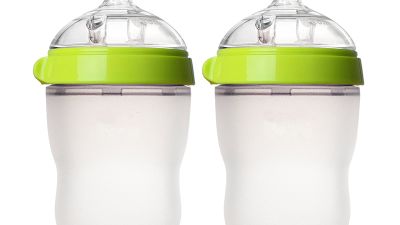
Wholesale BPA-free silicone baby feeding bottles from trusted China suppliers offer a reliable solution for baby product brands, retailers, and distributors. Made from 100% food-grade, biocompatible silicone, these bottles are soft, durable, lightweight, and shatterproof. Their gentle, breast-like texture can help support a smoother transition between breastfeeding and bottle feeding, while the flexible body provides a comfortable grip for parents during daily use.
Designed with an advanced anti-colic venting system, the bottles help reduce excessive air intake during feeding, supporting a more comfortable experience for babies. Wide-neck openings make filling and cleaning easier, while the heat-resistant silicone construction allows convenient sterilization through boiling or steam methods. China-based manufacturers can provide customizable capacities, colors, packaging, and accessories to meet different market requirements. With scalable production, consistent quality control, and certification support, these wholesale feeding bottles are suitable for global distributors seeking safe, practical, and appealing feeding products.
Look for medical-device experience, controlled cleanroom processes, and documented quality systems. Request certification evidence, material traceability, and process-validation records. Certificates alone are not enough.
Ask how the team controls temperature, pressure, curing time, flash, and air entrapment. Review inspection methods and sampling plans. Small details matter.
Traceability connects each silicone lot to finished components and batch records. It supports investigations when problems appear. Ask for anonymized examples.
Request installation, operational, and performance qualification records. Check whether testing covers the exact silicone grade, mold, cure cycle, and packaging. Missing details deserve questions.
Inspect samples under magnification for seams, flash, rough edges, and uneven walls. Compare dimensions against the approved drawing. A tiny defect can affect usability.
The supplier should follow a recognized medical-device quality system and biocompatibility requirements. Ask for audit results, training records, and change-control evidence. Do not rely on certificates alone.
They are very important. Poor maintenance can create dimensional drift, flash, or surface damage. Review tolerance studies, tooling schedules, and approval procedures for changes.
Ask for realistic lead times, packaging details, shipment protection, and production capacity. Check how packaging supports cleanliness and consistent handling. Promises can be optimistic.
Yes. Honest teams may explain capacity limits, validation gaps, or handoff risks. Perfect answers can feel reassuring, but they may hide uncertainty. Review the risks openly.
Medical Silicone Molding is a critical manufacturing process used to produce safe, flexible, and durable components for applications such as medical tubing, seals, valves, wearable devices, surgical accessories, and diagnostic equipment. In 2026, selecting a qualified manufacturer requires more than reviewing equipment or production capacity. Buyers should evaluate material expertise, molding technologies, design support, tooling capabilities, automation, scalability, and experience with complex medical geometries.
A reliable partner should operate robust quality systems, maintain full material traceability, and support regulatory documentation, process validation, inspection, and product testing. Important considerations include clean manufacturing environments, controlled production processes, risk management, and consistent quality across development and mass production. The best choice will be a manufacturer that combines technical competence, transparent communication, dependable supply capabilities, and a clear understanding of the product’s intended use, performance requirements, and compliance expectations. Careful comparison of these factors can help medical companies reduce development risks and establish a stable, long-term manufacturing relationship.