inquiry
Leave Your Message
0%

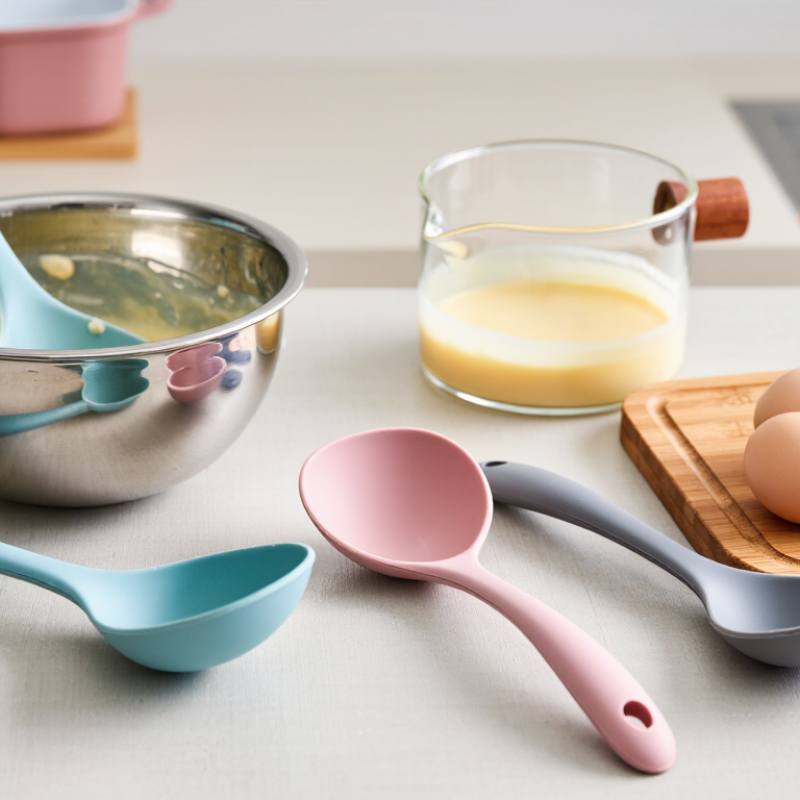
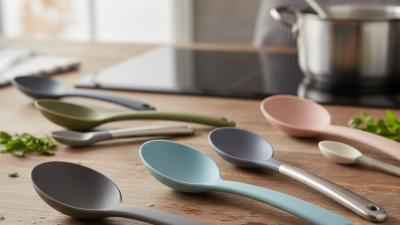
Picking the best silicone spoon for 2026 isn't just about colors or price tags. Honestly, a good spoon should reach into every corner of your saucepan, easily scrape out a mixing bowl, and feel solid enough when you’re stirring thick batter. It’s those little details that really count. For example, a thin edge can slide smoothly under soft eggs, while a sturdier head can handle dense mixtures without bending or wobbling too much. Ultimately, the right pick depends on your cooking style, the types of cookware you use, and how you like to grip your utensils.

This guide dives into the practical stuff—things like the shape of the head, how flexible it is, how comfy the handle feels, how easy it is to clean, and what the manufacturer says about heat limits. Just a heads up: always check the instructions before using any spoon near a hot pan, because not all silicone tools are built to handle the same temperatures. Also, pay attention to the construction. A smooth, one-piece design is usually easier to clean, but a handle made separately might feel more secure — though it’s worth inspecting any seams. No single spoon is perfect for every kitchen situation. For instance, a soft spatula-style head is great for gentle scraping, but it might feel awkward when you’re serving food. And honestly, your choice can depend on a lot of things like pan size, what you’re making, and your personal preferences. The goal here is to help you understand these little trade-offs clearly, so you can pick a dependable tool — rather than just going for the flashiest label or the prettiest photo.
What Is the Best Silicone Spoon for 2026?

Define Silicone Spoons: Solid Silicone, Coated Metal, and Core Types

A silicone spoon is not always silicone all the way through. The main distinction is its construction: solid silicone, a silicone coating over metal, or a silicone head attached to a separate core. That hidden structure affects flexibility, heat handling, and how the spoon feels when stirring a thick sauce.

Solid silicone spoons bend gently and are useful for scraping curved bowls without scratching nonstick surfaces. They can feel less firm when lifting dense food, though. A silicone slotted spoon works well for lifting vegetables from broth, but the slots should be easy to rinse clean. Small details matter.

Coated-metal spoons usually have a firm metal core beneath the silicone. They offer more support for stirring heavy mixtures, while the outer layer helps protect cookware. Check the edges and handle junction for gaps or peeling; damage can make cleaning harder. Some spoons use a rigid plastic or other nonmetal core instead, so appearance alone may not reveal the structure. Look for clear material information and follow the stated heat limits. I would not assume every soft, colorful spoon has the same durability. A little flex is useful; too much can make serving awkward.

Check Food-Contact Rules: FDA 21 CFR 177.2600 and EU Regulation 1935/2004

A good silicone cooking spoon should come with evidence, not just a “food-safe” claim. In the United States, FDA 21 CFR 177.2600 covers certain rubber articles intended for repeated food contact. It sets limits for extractives under specified test conditions. Whether it applies to a particular silicone spoon depends on its material and intended use. The regulation is not, by itself, proof that every finished spoon has been tested or approved.

In the European Union, Regulation 1935/2004 requires food-contact materials not to release substances at levels that could endanger health or unacceptably alter food. Silicone does not have one fully harmonized, EU-wide specific measure covering every product detail. So ask the seller for a declaration of compliance and supporting test information. Check that the documents match the spoon’s material, food types, and use conditions, including heat and repeated contact.

Look closely. A stamp alone is thin evidence. A useful report identifies the tested product or material and explains the conditions used, such as time, temperature, and contact medium. I would also inspect the spoon for cracks, sticky patches, or a persistent chemical odor before using it. These checks cannot replace proper testing, and paperwork can be confusing. That uncertainty deserves attention. A spoon used with hot tomato sauce may face different conditions from one used briefly with cool dough.

Compare Heat Ratings in °F and °C Against Your Cooking Needs

What Is the Best Silicone Spoon for 2026?

Choose a spoon by matching its stated heat limit to your cooking, not by color or softness. NIST’s SP 811 gives the conversion: °C = (°F − 32) × 5/9. A 400°F rating is about 204°C; 500°F is about 260°C. Those numbers make labels easier to compare.

For simmering sauces, a rating above 200°F (93°C) offers room beyond typical simmer temperatures. For frying, oil near 350°F (177°C) calls for a higher rating and careful handling. Check the spoon’s stated limit, especially before leaving it in a hot pan. The FDA’s 21 CFR 177.2600 sets extraction limits for certain repeated-use rubber articles; it does not provide one universal heat rating for silicone spoons. Also, a package rating may not clarify whether it applies to the head, handle, or whole utensil. That detail matters.

Tips: Check the neck, too. Compare both units, and leave a margin above your usual cooking temperature. If the label is vague, I would not guess; ratings can be easy to misread. Avoid resting the spoon against a hot burner or pan edge.

What Is the Best Silicone Spoon for 2026? - Compare Heat Ratings in °F and °C Against Your Cooking Needs
Cooking need Typical food or cooking temperature Suggested stated spoon rating What to check before choosing
Stirring soups and sauces at a simmer About 185–205°F (85–96°C) At least 300°F (149°C) Choose a spoon with a clearly stated maximum temperature and a handle that stays comfortable to hold.
Stirring food in boiling water or stock Water boils at about 212°F (100°C) at sea level At least 300°F (149°C) The boiling-point figure is for the liquid; it does not describe the temperature of a dry pan or burner.
Frying and sautéing Common frying-oil range: about 325–375°F (163–191°C) At least 400°F (204°C) Oil temperature is not the same as pan-surface temperature. Avoid leaving the spoon resting against a hot pan.
Frequent high-heat stovetop cooking Pan surfaces can exceed 400°F (204°C), depending on the pan, burner, and cooking time Consider a stated rating of 450–500°F (232–260°C) A higher rating provides more temperature headroom, but it does not mean the spoon can safely touch a hot burner or remain on a pan.
Scraping or stirring food during oven cooking Common oven settings include 350–450°F (177–232°C) Choose a spoon rated at or above the temperature it may actually encounter An oven setting is not necessarily the spoon’s exposure temperature. Check whether the product is rated for oven use; do not assume it is.
Everyday general-purpose cooking Usually low to moderate heat; actual temperatures vary by recipe and cookware A clearly stated rating of 400°F (204°C) or higher offers useful versatility Also check that the spoon is food-contact suitable, easy to clean, and compatible with your cookware.

Temperature guidance: cooking temperatures are typical reference values, not guaranteed utensil-contact temperatures. Silicone heat limits vary by product and construction, so follow the specific manufacturer’s stated maximum temperature and use instructions. Fahrenheit-to-Celsius values are rounded.

Match Spoon Sizes to Standard 5 mL Teaspoon and 15 mL Tablespoon Measures

A “teaspoon-sized” silicone kitchen spoon can mean different things. For reliable portions, use standard measures: one teaspoon holds 5 mL, and one tablespoon holds 15 mL. A tablespoon is three teaspoons. These are volume measures, not descriptions of a spoon’s handle or overall length.

Check the bowl capacity before relying on a spoon for recipes. If the maker lists milliliters, compare that number with 5 mL or 15 mL. If not, fill the spoon with water and pour it into a marked measuring cup. It may be a little fiddly, but it gives you a useful check. A serving spoon can look close to a tablespoon and still hold much more.

For baking, medicine-free kitchen tasks, or portioning sauces, use a proper measuring spoon when accuracy matters. A silicone spoon is handy for stirring thick batter and scraping a bowl, but its shape may make level filling tricky. I have found that rounded edges can leave a small mound behind. That detail is easy to miss. Rinse and dry the spoon before measuring sticky ingredients, and avoid assuming every “small” spoon equals 5 mL.

Assess Construction: Shore A Hardness, Seams, and Core Exposure

When comparing silicone spoons for 2026, Shore A hardness can describe firmness, but it is not a complete score. A softer head bends around a saucepan and scrapes curved corners; a firmer one stirs thick oatmeal with less flex. Check whether the stated value applies to the silicone, rather than a rigid inner core. Spoon thickness and testing methods also matter. Numbers need context.

Look closely at the head-to-handle transition. A smooth surface is easier to wipe than a deep seam that catches sauce or crumbs. Run a fingernail along the join, then inspect it under bright light. Gaps, ragged edges, or lifting silicone deserve caution. Tiny details count. A seam may seem harmless when dry, yet hold residue after mixing sticky dough.

Check whether the spoon is solid silicone or built around a core. No core should show through the head, edges, or tip. Flex the spoon gently and watch for cracks, whitening, or separation. Don’t overread one test. A very soft spoon may scrape well but feel awkward with dense food; a firm one can feel blunt against delicate cookware. I would weigh the stated hardness against the shape and finish, rather than trust one number. Even that comparison has limits: a spoon can look sound and still feel wrong in the hand.

Review Evidence: Migration Tests, Dishwasher Claims, and Warranty Terms

A silicone serving spoon can look sturdy on a shop page, but appearance says little about what may migrate into food. For a 2026 review, check whether migration-test results identify the exact spoon, tested color, food simulant, temperature, and contact time. A vague “food-safe” statement is not the same as a report. Details matter.

Dishwasher claims deserve the same scrutiny. “Dishwasher safe” may not explain whether the spoon was tested through repeated hot cycles or only a brief wash. Look for stated rack placement and temperature guidance. After washing, check for tackiness, cracks, lingering odor, or a loose handle. These signs do not prove a safety failure, but they are reasons to stop using a damaged utensil. I would not assume every dishwasher behaves alike.

Warranty terms can reveal how much practical support comes with the purchase. Read the coverage period, proof-of-purchase rules, and exclusions for discoloration, wear, or heat damage. A long warranty is useful only if the claim process is clear. I’d favor a silicone serving spoon supported by specific test documentation, realistic care instructions, and written coverage—not a confident slogan. Even then, paper evidence cannot replace sensible inspection at home.

Choosing a Custom Wide-Neck Silicone Baby Bottle Nipple with an Anti-Colic Vent System

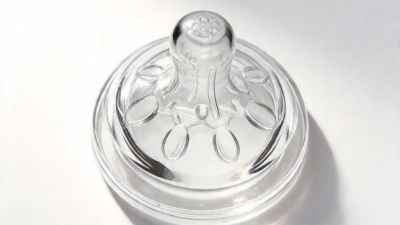
Choosing a custom wide-neck silicone baby bottle nipple with an anti-colic vent system starts with matching the design to your feeding routine. Made from soft, food-grade, BPA-free silicone, the nipple offers a flexible feel for everyday bottle feeding. Its wide-neck shape can be configured to suit compatible bottle designs, while custom options make it possible to select details such as size, flow rate, and other feeding-related specifications.

The integrated vent is designed to help manage air movement as your baby feeds, which may reduce the amount of air swallowed during feeding. Flow rate is another important consideration: a slower or faster option can be chosen according to your baby’s feeding needs and the intended application. Multiple sizes and customized configurations provide flexibility for different bottle setups and preferences.

When selecting a nipple, check that its dimensions and connection style match the bottle you plan to use, and follow the care and replacement guidance provided with the product. Inspect the silicone regularly for wear or damage, and choose a flow rate that supports a comfortable, steady feeding experience.

FAQS

How should I compare silicone spoon heat ratings in Fahrenheit and Celsius?

Convert Fahrenheit with °C = (°F − 32) × 5/9. A 400°F rating is about 204°C, while 500°F is about 260°C. Check both units.

What heat rating is suitable for simmering or frying?

For simmering, choose a stated limit above 200°F (93°C). Oil near 350°F (177°C) needs a higher-rated spoon and careful handling. Leave a margin.

Does a spoon’s heat rating cover the whole utensil?

Not always. The stated limit may apply only to the head, handle, or entire spoon. Check the label, including the neck.

Can I leave a silicone spoon in a hot pan?

Check its stated heat limit first, and avoid resting it against the pan edge or burner. I would not guess from appearance.

How do I know whether a spoon holds one teaspoon or tablespoon?

A standard teaspoon holds 5 mL; a tablespoon holds 15 mL. If capacity is not listed, fill the bowl with water and check a marked cup. A little fiddly.

Is a serving spoon accurate for measuring recipe ingredients?

Not necessarily. Bowl shapes vary, and rounded edges can make level filling tricky. Use a proper measuring spoon when precision matters.

What details should migration-test documentation include?

Look for the exact spoon, tested color, food simulant, temperature, and contact time. A general “food-safe” statement is not a test report.

What should I check after dishwasher cleaning?

Follow the care instructions, then inspect for tackiness, cracks, lingering odor, or a loose handle. These signs do not prove a safety failure, but damaged utensils should no longer be used.

What makes a warranty useful?

Check its coverage period, proof-of-purchase rules, exclusions, and claim process. Clear written terms matter more than a long promise. Paperwork has limits.

Conclusion

Choosing the best Silicone Spoon for 2026 starts with understanding its construction. A solid silicone spoon differs from a silicone-coated metal utensil, while some designs use an internal core for added stiffness. Check that food-contact information is clearly stated, including references to FDA 21 CFR 177.2600 or EU Regulation 1935/2004 where applicable. Compare the spoon’s stated heat limit in both °F and °C with the temperatures you expect during cooking, and avoid assuming that every silicone utensil has the same rating.

Consider size and build quality as well as heat resistance. A spoon’s capacity can be compared with standard measures: 5 mL for a teaspoon and 15 mL for a tablespoon. Look for a smooth, durable finish, secure seams, and no exposed core that could affect cleaning or use. Finally, review available evidence, such as migration-test documentation, dishwasher-care claims, and warranty terms. These details help you assess whether a spoon suits your cooking habits and offers clear, verifiable product information.

Evelyn

Evelyn

Evelyn is a dedicated marketing professional at a leading custom silicone manufacturer, specializing in precision silicone products since 2006. With a deep understanding of the industry, she plays a vital role in communicating the company's strengths and capabilities to a global audience. Evelyn is......
Previous How to Choose the Right Silicone Molding Supplier?