You’ve probably noticed that a ton of Silicone Straw products come from China—and honestly, that’s no accident. The country has become a go-to sourcing hub for cafés, retailers, hospitality groups, and private-label brands all over the world. Why? Well, the silicone processing industry there is pretty mature, customization is flexible without a lot of red tape, and the manufacturing capacity is competitive on price. But here’s the catch: a low quote shouldn’t be the only thing driving your supplier decision. There’s a lot more to it than that.
According to the UN Environment Programme, we're producing more than 430 million tonnes of plastic every year—and somewhere between 19 and 23 million tonnes of that ends up in our oceans and other aquatic ecosystems. That kind of pressure is making more buyers look seriously at durable alternatives. Grand View Research’s reusable straw market analysis points to the same trend, saying sustainability awareness and reusable food-service products are key growth drivers. Though it's worth noting, some reports lump silicone, metal, glass, and plastic all into one category, which can muddy the picture. So yeah, direct comparisons can be a little imperfect sometimes, honestly.
Honestly, when you're looking for a decent silicone straw supplier, they should be upfront about specs, food-contact paperwork, batch traceability, and independent test results. And on the buyer side, you’ll want to get hands-on with things like whether it’s platinum-cured, how it smells, wall thickness, flexibility, and how to clean the darn things. Certifications like FDA, LFGB, REACH, ISO 9001? They’re great for your due diligence—but they don't guarantee the factory will stay consistent. That's why production audits still matter, maybe more than the paperwork.
Anne Marie Bonneau, a zero-waste educator I really respect, has this great reminder: 'We don't need a handful of people doing zero waste perfectly. We need millions of people doing it imperfectly.' That line totally applies to the whole reusable straw debate. Honestly, a practical straw you actually use is way better than a perfect eco-friendly promise you never keep.
So here’s the thing about China’s top silicone straw suppliers—this guide breaks them down based on how they manufacture, how flexible their customization is, quality control, communication, and export track record. Keep in mind, though, what a supplier claims today might not hold up tomorrow. So don’t take anything at face value. Double-check every document, every sample, every little production detail before you put pen to paper.
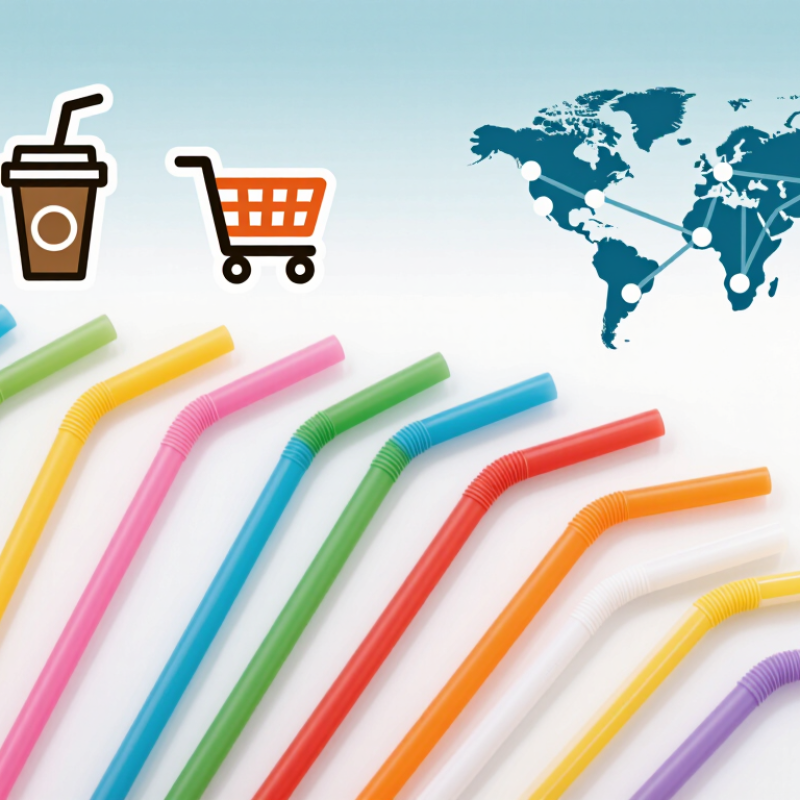
China Top Silicone Straw Suppliers for Global Buyers
What Makes China a Leading Source of Silicone Straws
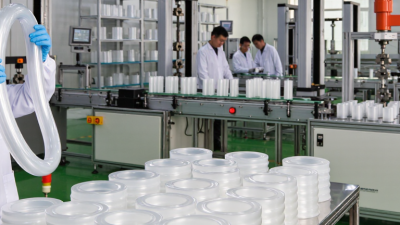
China has become a major source of silicone straws because production combines material knowledge, tooling, and export experience. Many suppliers manufacture the tube, mouthpiece, cleaning brush, and packaging in coordinated facilities. This reduces delays when buyers request complete sets. It also makes small design changes more practical.
Experienced factories usually offer platinum-cured or other food-contact silicone options, depending on the application. Buyers should request test reports, migration data, and batch traceability before approving samples. Color matching can be precise, while wall thickness and flexibility still need hands-on checking. A straw may look attractive but collapse in a cold drink.
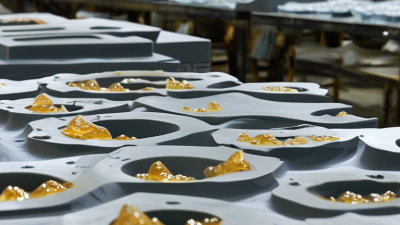
Factory networks are another advantage. Mold makers, silicone processors, printing workshops, and inspection teams often operate within the same manufacturing regions. That supports competitive pricing and faster sampling. Custom lengths, folding sections, wider openings, and reusable packaging are commonly discussed during development. Yet lower quotations can hide weak inspection practices or inconsistent silicone hardness. Not every factory performs equally. That difference matters.
During supplier audits, global buyers should examine mixing records, curing controls, odor, surface finish, and cleaning performance. They should also confirm whether production capacity matches the promised delivery schedule. Clear drawings and tolerances prevent avoidable disputes. “Straw Silicone” is not a complete specification; buyers must define grade, size, color, testing, and packaging. A careful supplier relationship grows through samples, documented corrections, and repeat inspections.
Chinese suppliers offer several silicone straw types for global buyers, each suited to a different drinking habit.
Straight straws work well with tumblers and office cups. Bent-neck versions make sipping easier from travel bottles. Wide-bore straws suit smoothies, milkshakes, and drinks containing fruit pieces. Some factories also produce collapsible straws with aluminum cases, useful for handbags and daily commuting. A practical
Silicone Straw Set
may include multiple lengths, cleaning brushes, and a storage pouch.
Material selection needs careful review. Food-contact silicone is flexible, odor-resistant, and less likely to crack than rigid plastic during repeated bending. Suppliers commonly provide different wall thicknesses and inner diameters. A 6 mm bore fits water, while 10–12 mm designs support thicker drinks. Platinum-cured silicone can offer a cleaner taste, but buyers should request migration testing and production samples. Easy to wash.
The market supports this product variety. Grand View Research valued the global reusable water bottle market at about USD 8.19 billion in 2023, with continued growth expected through 2030. That trend reflects demand for reusable drinking accessories, including straws. The OECD reported 353 million tonnes of plastic waste globally in 2019, reinforcing the need for durable alternatives. However, silicone is not automatically sustainable; its longer service life depends on repeated use. I would also check odor retention, compression after folding, and brush fit. Factory claims can sound precise, yet real testing sometimes tells a less perfect story.
Global buyers should examine silicone composition before comparing suppliers. Platinum-cured, food-contact silicone usually offers low odor and stable performance. Peroxide-cured grades may need stricter post-curing controls.
Look closely at the material certificate. It should identify silicone purity, curing method, colorants, and intended temperature range. FDA 21 CFR 177.2600 covers repeated-use rubber articles for food contact. In Europe, Regulation (EC) No. 1935/2004 requires materials to avoid harmful migration.
Testing should include overall migration, specific migration, heavy metals, and odor transfer. A Silicone Straw Tip should remain flexible without cracking after repeated washing. Small details matter.
UNEP’s 2023 Turning off the Tap report states that global plastic pollution could fall by 80% by 2040 through reuse and better product systems. Reusable straws support that direction, but only when they survive real use. Suppliers should provide cleaning-cycle data, compression testing, and temperature results. An independent laboratory report is stronger than a generic “food-grade” claim. It is also useful to inspect the inner channel for trapped residue, especially after exposure to milk or fruit drinks. This step is often missed. Perhaps testing should include more ordinary household conditions, not only controlled laboratory liquids.
How to Evaluate China Silicone Straw Manufacturers
China remains a major sourcing base for silicone food-contact products. Grand View Research valued the global silicone market at USD 18.31 billion in 2022, with continued growth expected through 2030. This wider market data does not prove straw quality. It shows why supplier screening matters. Ask for factory registration, production photos, material specifications, and recent third-party test reports. A polished sample can still hide weak process control.
Check whether the manufacturer uses platinum-cured or peroxide-cured silicone, and request the exact grade. For drinking straws, test evidence should cover food-contact migration, odor, color stability, and repeated washing. Relevant references may include FDA 21 CFR 177.2600, EU Regulation 1935/2004, or LFGB testing, depending on the destination market. SGS’s Global Packaging Trends research has repeatedly highlighted traceability and compliance as buyer priorities. Do not accept a certificate without checking its scope, date, and matching factory address.
Production details reveal more than a sales catalogue. Review mold maintenance, batch coding, hardness control, and inspection records. Request samples from three batches, not one. Measure wall thickness with calipers and test bending near the cut edge. Small differences matter. Also evaluate corrective-action speed after a failed test. Some factories provide excellent prototypes but inconsistent mass production. That gap deserves attention. A factory audit is useful, yet it is not perfect; independent retesting before shipment remains a sensible safeguard.
| Evaluation Dimension | Practical Benchmark | Documents or Evidence to Request | Why It Matters for Global Buyers |
|---|---|---|---|
| Food-contact compliance |
Required Compliance should match the destination market and intended use. |
Recent food-contact test reports for the finished straw, material declarations, and applicable compliance statements. Common references include FDA food-contact requirements, EU Framework Regulation (EC) No. 1935/2004, and applicable national requirements. | Silicone raw-material approval alone does not prove that the finished straw, pigments, printing, or processing aids are compliant. |
| Material specification | Food-grade silicone with a clearly defined grade, color system, hardness, and operating-temperature range. | Technical data sheet, silicone grade information, hardness specification, colorant declaration, and batch traceability records. | Clear specifications reduce variation between production batches and help confirm suitability for hot, cold, or acidic beverages. |
| Temperature performance | Many silicone products are designed for approximately −40°C to 200°C, but the actual range must be confirmed for the selected formulation and design. | Product-specific temperature test data, use instructions, and evidence covering repeated hot and cold cycles. | Generic silicone claims may not apply to the complete straw, printed parts, connectors, or cleaning process. |
| Dimensional consistency | Critical dimensions should be defined by drawing, including overall length, inner diameter, outer diameter, wall thickness, and connector fit. | Approved technical drawing, inspection report, sampling plan, and measurement records from multiple production batches. | Consistent dimensions support reliable drinking flow, lid compatibility, and interchangeability with accessories. |
| Hardness and flexibility | Silicone straws commonly use a soft-to-medium Shore A range, often approximately 30A–80A depending on the design and application. | Hardness test method, target tolerance, sample measurements, and confirmation that the test location and curing condition are controlled. | Hardness affects drinking comfort, collapse resistance, folding behavior, and ease of cleaning. |
| Odor and taste control | Finished straws should be free from strong residual odor or taste after washing and conditioning. | Pre-shipment sensory inspection records, cleaning process details, curing information, and retained samples for buyer approval. | Residual odor can result from incomplete curing, unsuitable additives, contamination, or poor storage conditions. |
| Manufacturing quality system | A documented quality system with controlled incoming materials, process checks, final inspection, and corrective-action procedures. | Quality manual summary, process flow chart, inspection standards, calibration records, and sample corrective-action reports. ISO 9001 certification may support system evaluation but does not replace product testing. | A documented system makes quality more repeatable and provides a process for resolving defects and complaints. |
| Factory production capability | Stable capability for liquid silicone rubber or compression-molding processes, depending on the product design. | Factory audit records, equipment list, production-flow photographs or video, mold-maintenance records, and evidence of in-house or controlled subcontracted processes. | Understanding the actual production route helps buyers assess capacity, process control, and dependency on third parties. |
| Customization and tooling | Capability to manage custom lengths, diameters, colors, packaging, logos, cutting profiles, and accessory compatibility. | Prototype samples, mold quotation, drawing approval process, color approval samples, and written ownership terms for tooling. | Formal design approval reduces the risk of expensive rework and prevents misunderstandings about customized dimensions. |
| Minimum order quantity | MOQ varies according to color, tooling, packaging, and production method; request separate MOQs for stock, custom, and private-label orders. | Written quotation showing MOQ by SKU, color, packaging format, and order frequency. | A low MOQ for standard products may not apply to custom colors, custom molds, or printed packaging. |
| Lead-time management | Lead time should be separated into sample development, tooling, first production, repeat production, and inspection stages. | Production schedule, approved sample date, tooling timeline, capacity confirmation, and shipment-readiness criteria. | Separate milestones make the delivery promise measurable and easier to manage across time zones. |
| Packaging and shipping protection | Packaging should protect straws from deformation, dust, odor transfer, moisture, and crushing during international transport. | Packaging specification, carton dimensions, drop-test or transit-test information where applicable, and loading photographs. | Silicone products can absorb odors from unsuitable storage materials and may deform if packed under excessive pressure. |
| Pre-shipment inspection | Use an agreed inspection standard covering appearance, dimensions, function, odor, quantity, packaging, and labeling. | Approved inspection checklist, acceptable quality limits, inspection report, defect photographs, and sample-retention policy. | A written inspection standard prevents disputes caused by different interpretations of acceptable quality. |
| Traceability and complaint handling | Each shipment should be traceable to material batches, production dates, operators or lines, inspection results, and packing records. | Lot-number format, batch records, retention-sample procedure, complaint-response timeline, and corrective-action template. | Traceability enables faster root-cause analysis, targeted recalls, and more effective corrective action. |
| Total landed cost | Evaluate product price together with tooling, testing, packaging, freight, duties, inspection, payment fees, and defect risk. | Itemized quotation, Incoterms, packaging cost, testing charges, tooling terms, payment schedule, and freight assumptions. | The lowest unit price may not represent the lowest total cost after compliance and logistics expenses are included. |
Note: Benchmark ranges are indicative industry evaluation references, not guarantees for any individual manufacturer. Final requirements should be confirmed through product-specific samples, current test reports, approved specifications, and an independent inspection where appropriate.
For global buyers, reliable silicone straw suppliers offer more than standard products. They support customization, packaging, and private label production from one coordinated process. A Silicone Straw Bottle can be adjusted for straw length, mouthpiece shape, color, and bottle capacity. Food-contact silicone should have clear material documentation and consistent softness.
Small details matter. In practice, the first color proof is rarely perfect. Buyers should approve a physical sample before mass production. Provide Pantone references, logo artwork, and exact dimensions. Suppliers can create embossed, printed, or molded logos, depending on the surface and budget. Ask for production samples, inspection records, and packaging photos before shipment. These steps reduce surprises, although they cannot remove every risk.
Packaging should match the sales channel. Individual boxes suit retail shelves, while recyclable bags and master cartons can reduce shipping volume. Private label orders may include custom inserts, barcode areas, warning text, and multilingual care instructions. Confirm carton strength, inner protection, and label placement early. A practical supplier will explain minimum order quantities, mold fees, lead times, and revision limits clearly. Keep samples. They help compare future batches for color, odor, fit, and sealing performance. Mistakes still happen, especially with flexible materials, so a clear approval checklist is worth using.
China Top Silicone Straw Suppliers for Global Buyers
Ordering silicone straws from China requires more than comparing unit prices. I start with a written specification covering length, diameter, wall thickness, color, hardness, and packaging. Samples matter. Ask for production samples, not only catalog pieces. Check odor, flexibility, cutting edges, and cleaning brush fit before approving a purchase order. A small size difference can make a straw uncomfortable or unusable.
Quality control should continue after sampling. Request material documentation and food-contact test reports for the destination market. During production, inspect silicone hardness, surface marks, color consistency, and logo placement. A practical inspection plan can include random carton checks, dimensional measurements, and pull testing. Keep an approved sample with the purchase contract. It gives both sides a clearer reference. Still, paperwork is not proof of perfect production. I have seen minor color variation pass a factory check but fail a buyer’s retail standard.
International shipping needs early planning. Confirm carton dimensions, gross weight, quantity per box, and shipping marks before booking freight. These details affect freight quotations and warehouse handling. Ask the supplier to verify the correct customs classification with your broker. Prepare the commercial invoice, packing list, transport document, and required compliance records. Protect cartons from crushing and moisture during long transit. Choose air freight for urgent small orders, but ocean freight usually suits larger volumes. Leave buffer time for inspection, port delays, and customs questions. Small delays become expensive when launch dates are fixed.
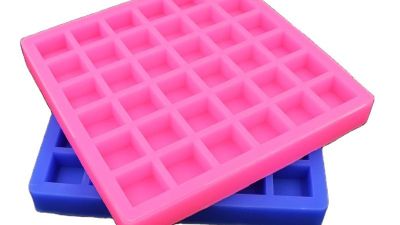
Custom silicone chocolate molds from China are gaining attention as confectionery producers seek flexible, efficient, and dependable food-processing solutions. Industry insights from food processing equipment research highlight the growing importance of hygienic materials, production consistency, labor efficiency, and adaptable equipment across both commercial and small-scale operations. In this environment, silicone molds provide a practical option for chocolate makers, bakeries, dessert manufacturers, and home users who need repeatable shapes without complicated demolding procedures.
Our molds are manufactured in China using 100% non-toxic, food-grade silicone selected for durability, flexibility, and safe contact with food. Their smooth surfaces support easy chocolate release, while stable construction helps maintain accurate shapes through repeated use. The molds can be customized in a wide range of colors to match packaging themes, seasonal collections, retail displays, or specific production requirements. Custom sizing, cavity arrangements, and patterns also allow suppliers to support different product lines, from small decorative pieces to larger-volume confectionery formats.
For buyers evaluating Chinese suppliers, quality control, material transparency, production capacity, and communication are essential considerations. A reliable factory can provide consistent molding performance, practical customization support, and scalable production for wholesale orders. These features make silicone chocolate molds suitable for professional kitchens, confectionery workshops, catering businesses, and creative home baking, while their lightweight design simplifies storage, handling, and routine cleaning.
Platinum-cured, food-contact silicone usually offers low odor and stable performance. Peroxide-cured silicone may require stricter post-curing controls. Ask for the exact grade.
Request a material certificate identifying silicone purity, curing method, colorants, and temperature limits. Check the certificate’s date, testing scope, and factory address. A generic “food-grade” claim is not enough.
Testing should cover overall migration, specific migration, heavy metals, odor transfer, and color stability. The product should remain flexible after repeated washing. Testing is not perfect.
Request cleaning-cycle data, compression results, and temperature testing. Inspect the inner channel after exposure to milk or fruit drinks. Residue can hide inside. Ordinary household conditions deserve more attention.
Review factory registration, production photos, material specifications, and recent independent reports. Ask for samples from three production batches. Measure wall thickness with calipers and bend the cut edge. A polished sample may hide weak process control.
Check mold maintenance, batch coding, hardness control, and inspection records. Ask how quickly the factory handles failed tests. Prototype quality may exceed mass-production quality. That gap matters.
Confirm straw length, mouthpiece shape, product color, logo method, and bottle capacity. Provide exact dimensions, artwork, and color references. Approve a physical sample before mass production. The first color proof may be wrong.
Match packaging with the sales channel and protect flexible products during shipping. Confirm carton strength, inner protection, label placement, care instructions, and barcode areas. Clarify minimum order quantities, mold fees, lead times, and revision limits. Keep approved samples for later comparison.
China has become a leading source of Silicone Straw products because of its mature manufacturing capabilities, broad supplier network, competitive pricing, and flexible production capacity. Global buyers can find reusable, collapsible, straight, bent, wide-mouth, and children’s silicone straw options for different beverage applications. Reliable suppliers generally use food-grade silicone and should provide clear information about material composition, durability, odor resistance, temperature tolerance, and applicable safety testing.
When evaluating Chinese manufacturers, buyers should review production experience, quality management systems, sample performance, factory capabilities, and communication efficiency. Many suppliers support customization, including colors, sizes, packaging formats, logos, and private-label requirements. Before ordering, buyers should confirm specifications, minimum order quantities, lead times, inspection procedures, and defect-handling policies. Careful quality control throughout production, combined with secure packaging and a clear international shipping plan, can help reduce damage, delays, and unexpected costs while ensuring consistent product quality.