When it comes to global buyers picking a Silicone Bowl, appearance isn’t usually the main reason. Instead, they look at things like heat resistance, flexibility, stability, how easy it is to clean, and shipping efficiency. For example, a collapsible camping bowl can really save space in your luggage, while a divided bowl might make meal prep easier for families, restaurants, or even pet owners.
Dr. Elena Morris, who's a silicone product engineer at Meridian Materials Group, puts it well: “The right bowl strikes a good balance between being safe for food contact, practical in design, and capable of withstanding everyday use.” That’s a pretty important point. A soft, foldable bowl might be great for storage but could collapse when you’re actually using it, and a stiff, stackable bowl might take up more space in storage. Small tweaks in design can actually add up to noticeable costs during manufacturing.
In this guide, we’ll take a look at ten different types of Silicone Bowls that international purchasing teams might consider. We’re talking about baking bowls, suction bowls, travel-friendly ones, pet bowls, baby bowls, mixing bowls, freezer-safe options, and stylish serving bowls. Each kind has its own target buyer, specific use cases, and certain quality risks. When evaluating these bowls, useful checks include things like odor retention, how smooth the edges are, tear resistance, compatibility with lids, and how they hold up after repeated washes.
Now, some conclusions might seem a bit less certain. For example, a sample from a supplier might perform perfectly, but when mass-produced, you might run into issues like uneven thickness or flimsy rims. And don’t forget — product photos often hide important details. So, buyers should definitely ask for technical data, food safety certifications, production samples, and packaging tests before committing to large orders. Regional standards and certifications can vary, so what passes in one country might not be good enough somewhere else. The best Silicone Bowl isn’t always the cheapest or flashiest in color — sometimes, the simplest, plainest design will end up lasting the longest.
All in all, choosing the right silicone bowl is about balancing safety, functionality, and durability. It might take a little extra effort upfront, but it pays off in the long run.
What Defines a Silicone Bowl and Why Global Buyers Choose It
A silicone bowl is made from flexible, heat-resistant silicone rubber, usually cured into food-contact products. Unlike ordinary plastic, it bends without cracking and returns to its original shape. Many certified grades tolerate microwave, freezer, and dishwasher use, but performance depends on formulation and testing. Grand View Research estimated the global silicone market at about USD 20.7 billion in 2023, with continued growth expected through 2030. That expansion reflects demand from food service, household storage, baby feeding, and outdoor cooking.
Global buyers often select silicone mixing bowls, collapsible bowls, suction bowls, portion bowls, pet bowls, baking bowls, travel bowls, serving bowls, freezer bowls, and children’s bowls. Their lighter weight can reduce shipping burden. Their flexibility also saves warehouse space when products nest or collapse. Reusable use may reduce replacement frequency, although durability is not guaranteed. Poor fillers, weak rims, and unpleasant odors still appear in low-cost products. That is an uncomfortable reminder: “silicone” alone proves little. Buyers should request migration tests, temperature limits, material declarations, and batch records. The U.S. FDA food-contact framework and European food-contact requirements provide useful compliance references.
Tips: Check the bowl’s actual temperature range. Inspect seams, walls, and base stability. Ask for independent laboratory reports. Do not rely only on marketing claims. A slightly imperfect shape can reveal inconsistent molding, so sample testing matters before large orders.
What Are the Top 10 Silicone Bowl Types for Global Buyers?
Silicone bowls are classified by structure, purpose, and formulation. A practical global shortlist includes nesting, collapsible, divided, suction-base, pour-spout, measuring, freezer-safe, microwave-safe, pet-feeding, and travel bowls. Nesting designs save warehouse space, while collapsible models reduce shipping volume. Divided bowls support portion control. Suction bases improve stability on smooth tables. Pour-spout and measuring bowls suit baking and food preparation. Freezer-safe and microwave-safe models serve meal storage. Pet and travel bowls address mobile feeding needs.
Material classification matters just as much. Platinum-cured silicone usually offers cleaner processing and stronger odor control. Peroxide-cured silicone can reduce cost, but buyers should inspect residual testing. “Food-grade” is not a universal performance guarantee. Buyers should request migration, temperature, tensile-strength, and odor reports for each production batch. Applicable food-contact rules also differ by destination.
Grand View Research estimated the global silicone market at about USD 18.5 billion in 2022, with continued growth forecast through 2030. Mordor Intelligence also identifies food-contact products as an expanding silicone application area. These figures suggest durable demand, not automatic product quality. In my sourcing experience, folding hinges and thin rims fail before the bowl body. That detail is easy to miss. A stronger classification should include wall thickness, shore hardness, seam design, packaging protection, and test traceability. It is not perfect, but it is more useful than judging bowls by color or shape alone.
| Rank | Silicone Bowl Type | Primary Classification | Typical Design Features | Common Applications | Typical Capacity | Material Configuration | Typical Temperature Suitability | Key Buyer Considerations |
|---|---|---|---|---|---|---|---|---|
| 1 | Food-Preparation Mixing Bowl | Kitchenware | Flexible walls, rounded interior, stable base, and easy-pour rim | Mixing batter, sauces, dough ingredients, and salad components | 1.5–5.0 L | Food-contact-grade silicone; often reinforced with a rigid base or rim | Usually about −40°C to ret 230°C, depending on the formulation | Wall stiffness, pouring control, nesting efficiency, and resistance to staining |
| 2 | Collapsible Storage Bowl | Space-Saving Design | Accordion-style or fold-flat sidewalls with a locking or fitted lid | Food storage, camping, travel, meal preparation, and small kitchens | 0.5–3.5 L | Flexible silicone body, commonly paired with a polypropylene or silicone lid | Often suitable for freezer and microwave use; exact limits depend on the lid and construction | Collapsed height, seal quality, hinge durability, and resistance to repeated folding |
| 3 | Suction-Base Baby Feeding Bowl | Infant Feeding | Low profile, wide base, smooth corners, and a suction pad underneath | Infant self-feeding, weaning, snacks, and portioned meals | 250–500 ml | Food-contact-grade silicone; typically made as a one-piece molded product | Commonly designed for warm foods, microwave reheating, and dishwasher cleaning when specified | Suction performance on smooth surfaces, edge safety, odor retention, and cleaning access |
| 4 | Baking and Oven Bowl | Bakeware | Heat-resistant flexible body, reinforced rim, and smooth release surface | Preparing, baking, and serving cakes, puddings, bread mixtures, and desserts | 0.8–2.5 L | Heat-resistant silicone, sometimes supported by a metal or rigid insert for handling | Many products are rated for oven use up to approximately 200–230°C; the product specification governs | Thermal stability, shape retention when filled, cooling behavior, and compatibility with oven racks |
| 5 | Meal-Prep Bowl with Airtight Lid | Food Storage | Stackable bowl body, fitted lid, sealing groove, and sometimes a vent for reheating | Meal preparation, leftovers, lunch packing, and refrigerator organization | 500 ml–1.5 L | Silicone bowl with silicone, polypropylene, or other food-safe lid components | Temperature suitability varies between bowl and lid; freezer and microwave claims require separate verification | Leak resistance, lid retention, stackability, odor transfer, and dimensional stability |
| 6 | Pet Feeding Bowl | Pet Care | Non-slip base, broad opening, rounded edges, and optional raised or slow-feeding pattern | Dry food, wet food, water, travel feeding, and slow feeding | 300 ml–2.0 L | Food-contact-grade silicone; may include a weighted or rigid anti-slip base | Generally suitable for room-temperature food and routine dishwasher cleaning when specified | Base grip, bite resistance, cleaning convenience, bowl height, and size for the target animal |
| 7 | Portion-Control and Snack Bowl | Servingware | Compact round or divided compartments with a stable, lightweight structure | Snacks, condiments, nuts, fruit, sauces, and controlled serving portions | 100–600 ml | Thin- or medium-wall food-contact-grade silicone | Typically suitable for cold and warm foods; microwave and dishwasher suitability should be confirmed | Portion consistency, color stability, stackability, and resistance to oil-based staining |
| 8 | Ice-Cream and Freezer Bowl | Cold-Use Product | Flexible wall construction, rounded base, and compact form for freezer storage | Ice cream, frozen desserts, chilled ingredients, and portioned frozen foods | 250–900 ml | Low-temperature-resistant food-contact-grade silicone | Often suitable for freezer temperatures around −20°C; the stated product rating should be checked | Flexibility when cold, crack resistance, release performance, and space-efficient storage |
| 9 | Silicone Steaming Bowl | Steam Cooking | Perforated or vented structure, heat-resistant walls, and a rim designed for a steamer basket | Steaming vegetables, dumplings, fish, grains, and small portions | 500 ml–2.0 L | Heat-resistant silicone, sometimes combined with a rigid support ring | Designed for steam exposure near 100°C; oven or microwave use depends on the complete design | Drainage, steam circulation, support stability, food release, and ease of cleaning |
| 10 | Foldable Travel and Outdoor Bowl | Travel and Outdoor | Lightweight collapsible body, reinforced rim, carabiner-compatible loop, or compact storage profile | Travel meals, camping, picnics, outdoor cooking, and portable pet feeding | 300 ml–1.5 L | Flexible silicone, frequently combined with a rigid rim or support ring | Usually intended for ambient-temperature use; heating limits vary by model | Packed size, weight, drying speed, tear resistance, and performance on uneven surfaces |
Note: Temperature ranges and food-contact suitability vary by silicone formulation, wall thickness, additives, lids, and supporting components. Buyers should confirm the manufacturer’s technical specification, applicable food-contact regulations, and cleaning instructions before purchase.
The Top 10 Silicone Bowl Types for Global Buyers reflect different kitchens, logistics needs, and safety expectations. Standard mixing bowls suit bakeries and food-service buyers. Collapsible bowls save warehouse space and shipping volume. Nesting bowls reduce shelf footprints. Suction-base bowls help children eat with fewer spills. Divided bowls separate rice, vegetables, and sauces. Measuring bowls support controlled recipes. Microwave-safe bowls serve reheating markets. Freezer-safe bowls support meal preparation. Serving bowls suit home dining and catering. Travel or portion bowls fit snacks, lunches, and outdoor use.
Selection should begin with material evidence, not appearance. Grand View Research reported the global silicone market at approximately USD 20 billion in 2023, with continued growth expected through the decade. Fortune Business Insights also identifies food-contact products as an important silicone application area. These figures suggest strong demand, but they do not prove every bowl is suitable for food use. Buyers should request food-contact test reports, temperature ranges, migration results, and batch traceability. “BPA-free” alone is not enough.
In practical sourcing, inspect the rim, hinge, valve, and base first. Thin walls may collapse during filling. Strong suction may weaken on textured tables. A dark color can hide residue. That matters. For export orders, confirm carton dimensions, stacking tests, odor checks, and cleaning instructions. Regional standards differ, and suppliers sometimes provide incomplete documentation. I have found that a slightly heavier bowl often performs better, though it may raise freight costs. Durability and landed price must be tested together.
Comparison of common silicone bowl categories by typical nominal capacity used in international household, food-service, baby-care, and outdoor-product specifications.
The capacities represent commonly marketed sizes for each bowl type and are intended for product planning and category comparison. They are not company sales figures or brand-specific data.
Silicone bowl demand is growing with interest in flexible, reusable household products. Grand View Research estimated the global silicone market at about USD 18.5 billion in 2022, with steady growth projected through 2030. For global buyers, bowl design matters as much as material. A round everyday bowl offers easy cleaning and balanced feeding. A shallow bowl suits cats and flat-faced pets. A deep bowl reduces splashing. A non-slip bowl stays stable on smooth tile. The ranking is practical, not absolute.
A slow-feeder bowl uses raised ridges to extend mealtimes and reduce gulping. A collapsible travel bowl folds into a bag, making it useful during hikes or transport. A suction-base bowl resists sliding, though dusty floors weaken its grip. A divided bowl separates dry food, wet food, or water. A raised bowl can reduce bending for some older dogs, but its height needs careful measurement. The Dog Silicone Bowl should have rounded edges and a firm rim. Small details matter.
A baking bowl tolerates oven heat and releases food easily when its temperature rating is clear. A freezer bowl supports portion preparation and compact storage. A measuring bowl helps control recipes and pet-food portions. Fortune Business Insights reported continued expansion in the global pet food market, increasing demand for practical feeding accessories. Buyers should check thickness, odor, drainage, and food-contact test documents. I would not trust every “heat-resistant” claim without testing. Silicone can feel premium, yet thin walls may collapse or retain smells. Design claims need evidence.
Global buyers often compare ten silicone bowl types: collapsible, nesting, mixing, divided, suction-base, freezer-safe, microwave-safe, travel, pet, and baby bowls. The right choice depends on use, not shape alone. A mixing bowl needs stiffness and a stable rim. A travel bowl needs flexible walls and compact storage. A divided bowl should keep partitions firm during washing.
Safety starts with verified food-contact silicone. Ask for material documentation and market-specific compliance testing. Check for strong odors, oily surfaces, uneven coloring, or sticky edges. These signs do not prove danger, but they deserve investigation. A Silicone Bowl Lid should fit securely without creating difficult pressure or trapping food residue. Smooth seams are easier to clean. Avoid designs with deep, hidden channels.
Heat resistance needs practical testing. Read the stated temperature range, then consider microwaves, ovens, steam, and dishwashers separately. A bowl may tolerate heat but deform near a heating element. Never place it directly on a flame or hot metal surface. Durability depends on tear strength, wall thickness, rim recovery, and repeated folding. Press the base flat and inspect whether it returns quickly. It should not remain creased.
I have seen attractive bowls fail at the rim. Appearance can mislead. Compare samples after repeated washing, freezing, and flexing. No bowl is perfect. Buyers should record these results before ordering large quantities.
Global buyers usually compare ten silicone bowl types: collapsible, travel, slow-feeder, raised, double, suction-base, divider, puzzle, splash-proof, and Silicone Dog Bowl designs for puppies. Each requires different testing. Food-contact silicone should be supported by supplier declarations, migration testing, and traceability. In the United States, buyers often check 21 CFR 177.2600 requirements. European projects may require Regulation (EC) 1935/2004 and relevant good manufacturing practices. An ISO 17025-accredited laboratory can strengthen test credibility. Documentation matters more than attractive color samples.
Customization affects both performance and MOQ. Buyers can request diameter, wall thickness, folding height, logo placement, packaging, and shore hardness. However, adding pigments, tooling, or multiple colors can raise the minimum order quantity quickly.
APPA’s 2024–2025 National Pet Owners Survey estimated 82 million U.S. households owned a pet, showing strong demand, but this is not a global forecast. Suppliers should separate sampling MOQ, color MOQ, and production MOQ. A low MOQ may hide higher unit costs. A perfect specification rarely exists; buyers should test real washing, folding, odor retention, and stability.
Tips: Ask for batch records and full test reports. Confirm whether testing covers the finished bowl, not only raw silicone. Request samples from different production lots. Measure rim deformation after repeated dishwasher cycles. Avoid approving a design based only on photographs. One overlooked detail can create returns.
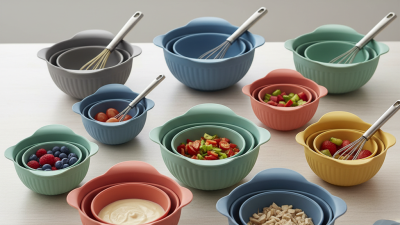
Global buyers should match bowl design with local eating habits, kitchen space, and safety expectations. Ten practical types include nesting bowls, divided bowls, suction bowls, collapsible bowls, feeding bowls, mixing bowls, portion bowls, travel bowls, pet bowls, and heat-resistant serving bowls. Each format solves a different problem. A compact Silicone Bowl Set suits small apartments and online multipacks. Deep mixing bowls work better for family kitchens and bakery users.
Material performance needs close checking. For hot-food markets, buyers should review heat resistance, odor retention, wall stability, and food-contact documentation. A thin collapsible bowl may save shipping space, but it can flex under thick soup. Suction bases help children, although dusty tables reduce their grip. Divided bowls support portion control, yet extra seams may require careful cleaning. These details matter more than attractive colors.
Market testing should include real use, not only catalog inspection. Place a bowl on a wet table, fill it with warm rice, and test the lid after repeated washing. Check whether local consumers prefer individual bowls or larger shared formats. Retail packaging also needs suitable language, measurements, and recycling information for the destination market. A common mistake is treating one design as universally suitable. It rarely is. Some buyers may also overlook storage height, especially when shelves are narrow. Small trials can reveal that weakness before a large order.
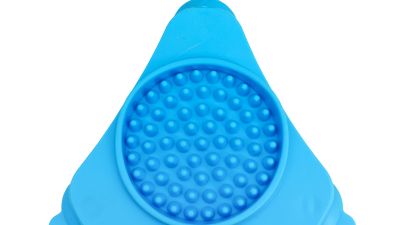
Food-grade silicone dog lick mats offer a smarter way to slow feeding and enrich treat time. According to the American Pet Products Association’s 2023–2024 National Pet Owners Survey, approximately 65.1 million U.S. households own a dog, highlighting the growing demand for practical products that support everyday pet care. Instead of allowing dogs to finish meals or treats too quickly, a textured lick mat spreads food across small grooves, encouraging slower, more focused licking. Peanut butter, yogurt, wet food, or soft pet snacks can be used to create an engaging activity that helps reduce boredom during meals, training, grooming, or quiet time at home.
Made from BPA-free, food-grade silicone, this reusable mat is soft enough for comfortable licking while remaining flexible and durable for regular use. Its calming, repetitive texture can provide constructive enrichment for dogs that need a relaxing distraction, including during grooming or short periods alone. The lightweight design also makes it convenient for travel, while its washable surface supports better feeding hygiene. As pet owners increasingly prioritize wellness and interactive care, customization options such as private logos, colors, shapes, and packaging make this product suitable for OEM and ODM projects. As reported in the APPA survey, pet owners continue to invest in products that improve the quality and convenience of daily companionship.
: Match the bowl to its use. Mixing bowls need firm walls, while travel bowls need flexible walls and compact storage.
Request food-contact documentation, migration testing, batch records, and traceability. Inspect odors, oily surfaces, sticky edges, and uneven coloring.
Review the stated temperature range. Test microwave, oven, steam, and dishwasher use separately. Never place the bowl over flames.
Check tear strength, wall thickness, rim recovery, and folding performance. Press the base flat, then see whether it quickly returns.
A secure lid helps prevent spills. Smooth seams reduce residue buildup. Avoid deep channels that are difficult to clean.
Diameter, wall thickness, colors, tooling, packaging, and hardness can change costs. Separate sample, color, and production minimums.
Check local eating habits, kitchen space, packaging language, measurements, and recycling information. One design rarely fits every market.
Use samples from different production lots. Test warm rice, wet tables, repeated washing, freezing, folding, and lid performance.
No. Appearance can mislead. I have seen appealing bowls fail at the rim after repeated washing.
A thin collapsible bowl may flex under thick soup. Suction bases may weaken on dusty tables. Small trials can reveal this.
This guide explains what makes a Silicone Bowl valuable for global buyers: flexible construction, lightweight handling, easy cleaning, and resistance to everyday heat and cold. It shows how bowls can be classified by design, intended use, capacity, shape, and silicone grade, then introduces ten practical types, including collapsible bowls, mixing bowls, baking bowls, storage bowls, portion-control bowls, baby feeding bowls, pet bowls, travel bowls, prep bowls, and serving bowls. Each type is reviewed according to its key features, target users, and most suitable market applications.
The article also outlines how to compare food-contact safety, heat resistance, odor retention, flexibility, structural durability, and cleaning performance. For international sourcing, buyers should consider applicable testing requirements, labeling, packaging, customization options, color and size selection, production consistency, and minimum order quantities. The final section provides a practical framework for matching bowl types with household, food-service, retail, outdoor, baby-care, and pet-care markets while balancing quality, cost, logistics, and customer expectations.